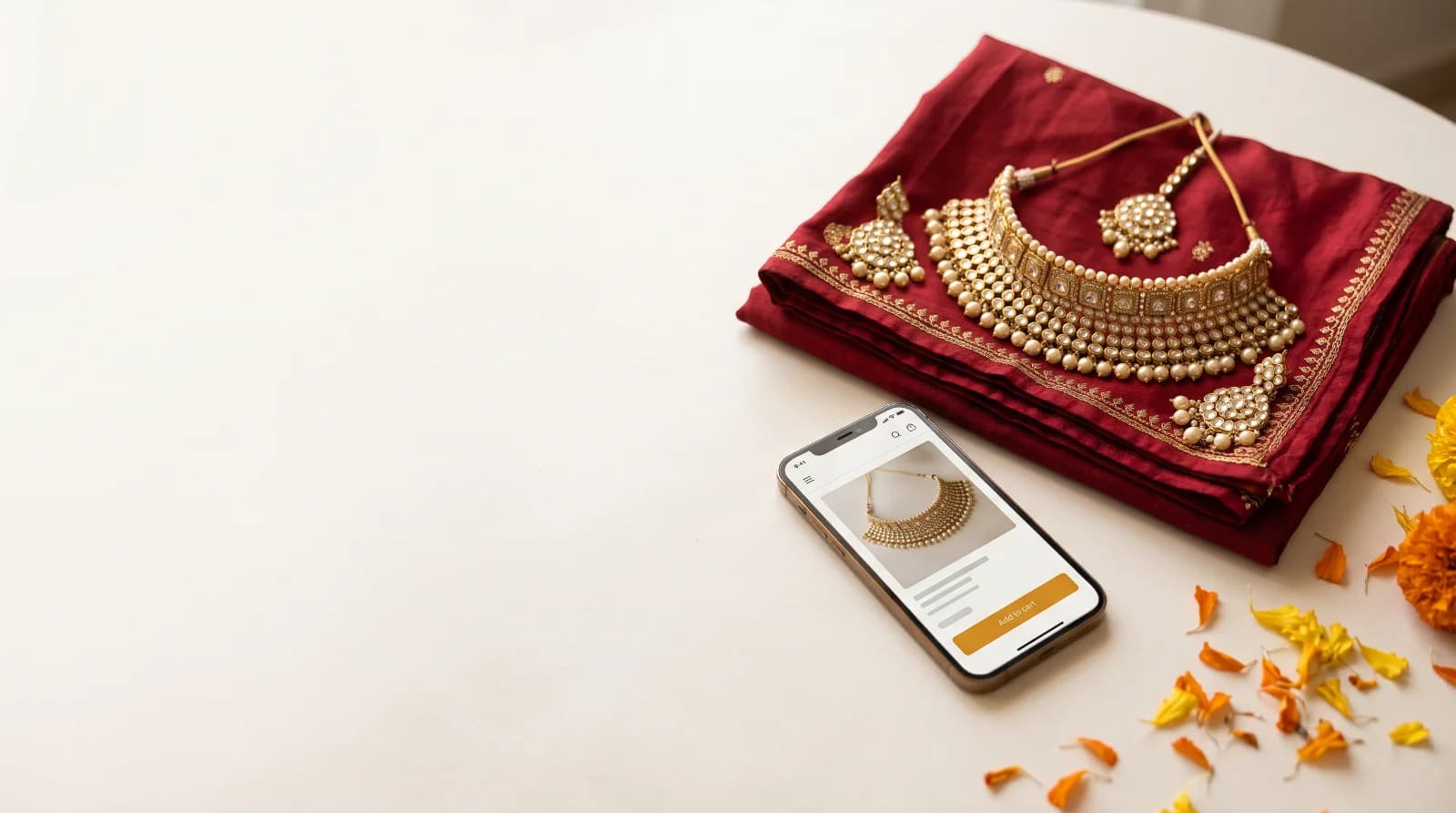
The first wedding dates of the 2026–27 season are 21, 24, 25 and 26 November. Brides and their families don't shop in the week of the wedding. They shop weeks before, often late at night on a phone, flipping between your store and three others. If your Shopify store isn't ready by mid-November, you'll miss the first wave of orders.
The short version: you have about three weeks. That's enough to fix the things that lose bridal orders, which are unclear product pages, slow photo galleries, vague delivery dates and a checkout that doesn't feel safe for a ₹40,000 purchase. Below is the checklist we'd work through with any jewellery or boutique store this month, plus a two-week plan to get it done.
When does wedding season actually peak?
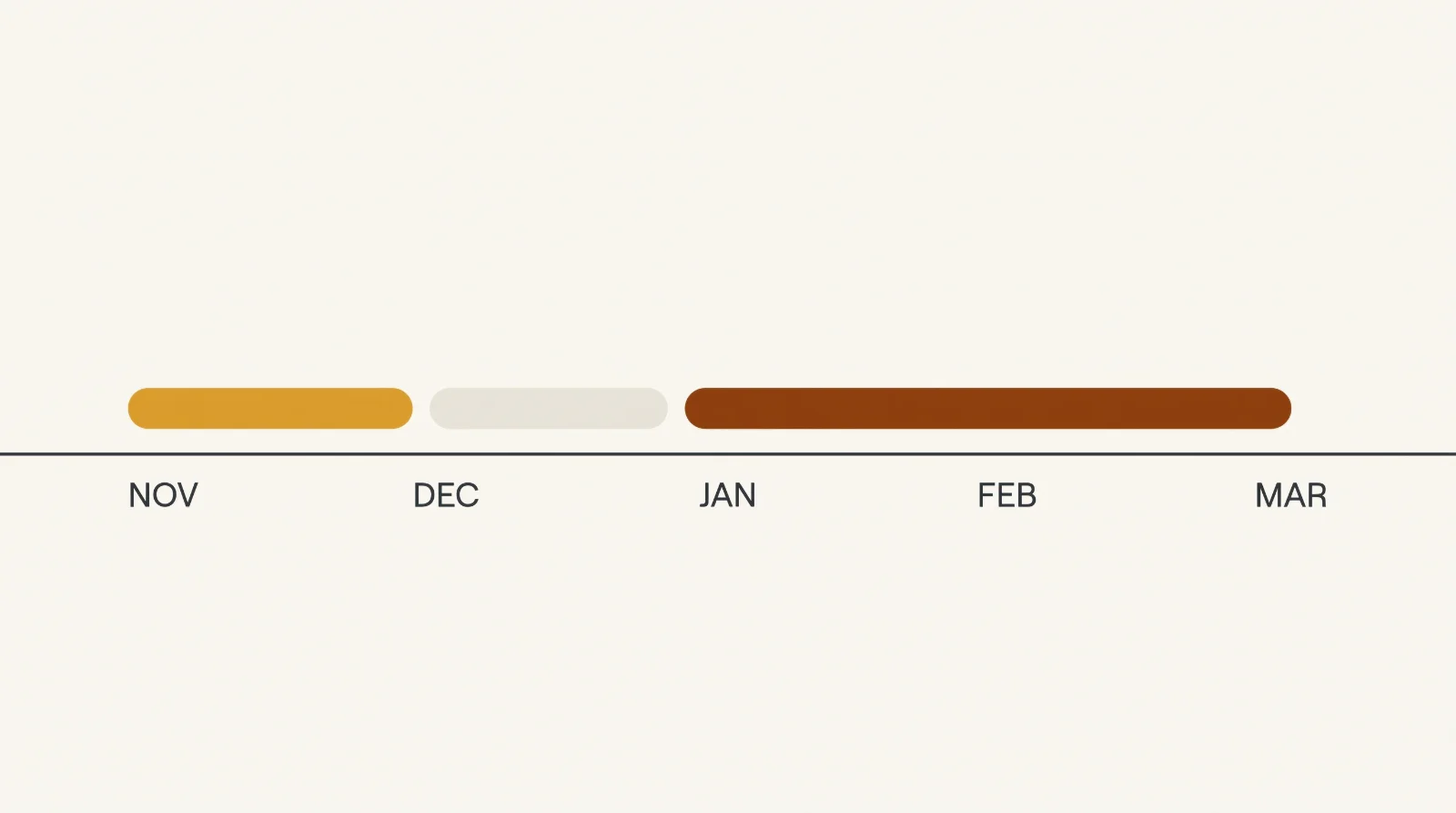
Wedding season in India runs in waves, not one long rush. After Dev Uthani Ekadashi on 20 November 2026, weddings run until about 12 December, then stop for Kharmas until mid-January. They pick up again from around 15 January, and February 2027 is the busiest month, with weddings continuing until about 14 March. (Exact dates vary by panchang, so check the one your customers follow.)
For an online store, each wave of weddings means a shopping wave that starts earlier.
Wedding wave | Wedding dates (approx.) | When buyers shop | What should be live |
|---|---|---|---|
Wave 1 | 21 Nov – 12 Dec 2026 | Now to early December | Bridal collections, delivery cut-offs, enquiry options |
Wave 2 | 15 Jan – 28 Feb 2027 | Late December to February | Fresh sets, restocked bestsellers, February offers |
Wave 3 | 1 – 14 Mar 2027 | February | Last-date delivery messaging, ready-to-ship pieces |
The quiet weeks over Kharmas are useful. Shoppers for February weddings are already browsing then, and you have time to fix what the first wave showed you.
The wedding-season Shopify checklist
Each item below fixes a reason we've seen bridal shoppers leave a store without buying.
1. Organise collections the way brides shop
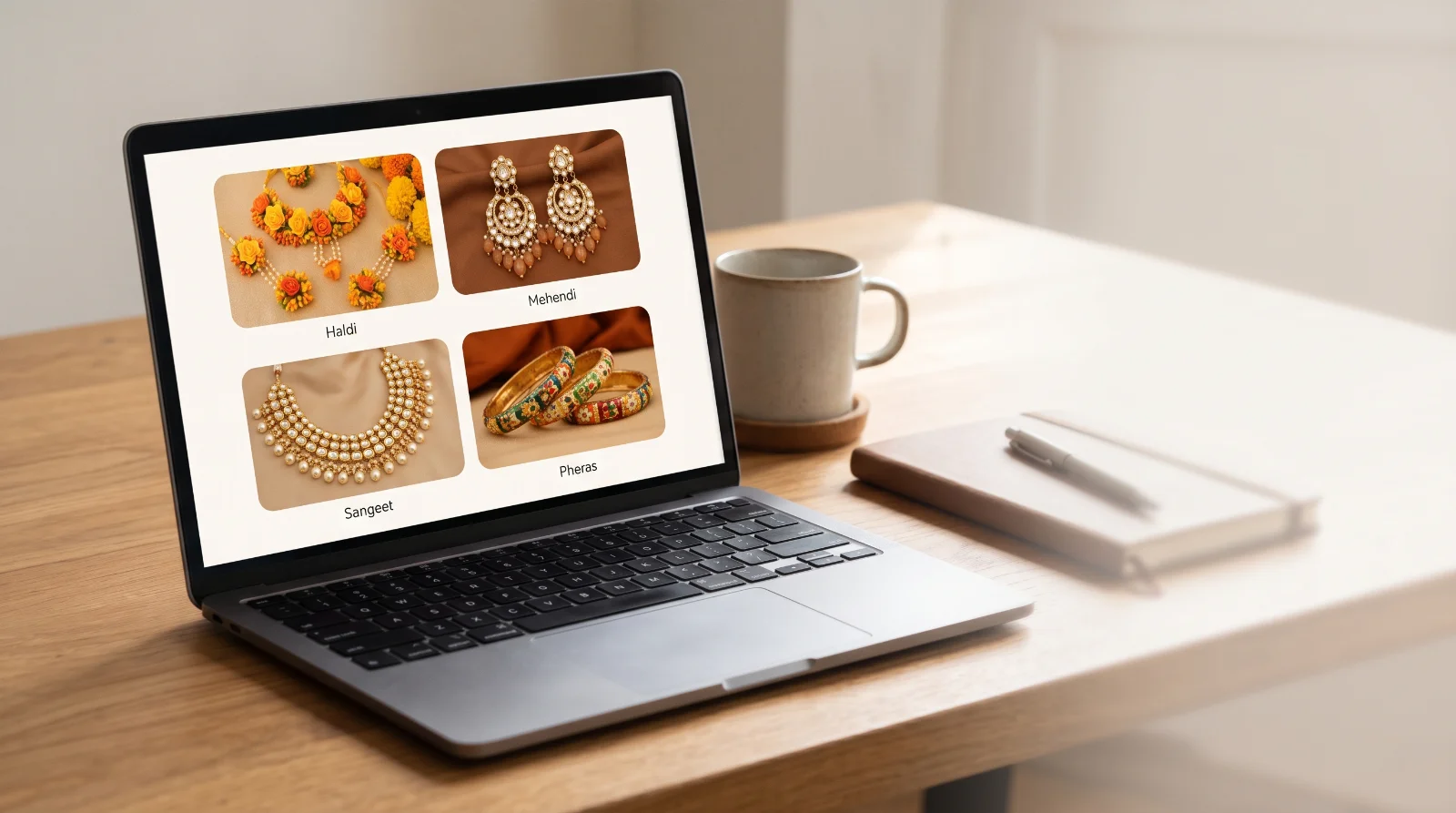
Bridal shoppers search by event and by style, not by your product codes. Set up collections for each function (haldi, mehendi, sangeet, pheras, reception) and for each craft (kundan, polki, meenakari, temple). One product can sit in several collections, so this doesn't mean duplicating anything. Add a "Bridal sets" collection at the top of your menu for the season.
2. Make product pages answer the worries
A buyer spending this much wants answers before she messages you. Every bridal product page should show:
Weight, metal and plating or purity, in plain words
For gold, the BIS hallmark with its six-character HUID, and a line saying the piece is hallmarked
Size, length and closure type (adjustable dori, hook, screw-back)
Close-up photos, an on-model photo and a short video in natural light
Care instructions and what's included in the box
If something isn't on the page, buyers either message you or go to a store that does show it. A short video does more to build trust than another line of description.

3. Sell the set, and the pieces
Many brides want the full bridal set. Plenty of others, like the mother of the bride or a cousin, want one statement piece. List the full set as a product and link to each piece on its own. A "complete the look" section under each product (matching earrings, maang tikka, bangles) raises order value without any discounting.
4. Give high-value buyers a person to talk to
Few people buy a ₹1.5 lakh polki set from a product page alone. Add a WhatsApp button on product pages and offer a "book a video call" option for bridal sets. Customisation requests (stone colour, length, matching to a lehenga) come through here, so reply quickly. During the season, a reply the next morning is often too late.
5. Promise a delivery date, not a delivery window
"Ships in 5–7 days" makes a bride with a wedding on 25 November nervous. Show an estimated "delivered by" date on the product page and post clear order cut-offs before each wave of weddings ("Order by 10 December for delivery before 12 December weddings"). For made-to-order pieces, state the making time upfront.
6. Make checkout feel safe for big amounts
Offer UPI, cards and EMI through your payment gateway. For expensive pieces, many Indian stores take a part payment upfront and collect the rest on delivery, which reduces fake COD orders while still feeling safe to the buyer. Show your returns and exchange policy near the Buy button, written the way you'd explain it in the shop, not in legal language.
7. Fix speed on mobile
Jewellery stores are image-heavy, and that's usually why they load slowly. Compress product photos, avoid putting five autoplay videos on the homepage, and remove apps you no longer use (each one can add scripts to every page). Test your store on a mid-range Android phone over mobile data. A page that takes more than a few seconds to load loses people before they see the necklace.
8. Set up follow-ups before traffic arrives
Turn on abandoned cart emails, and WhatsApp reminders if you use a WhatsApp app. A gentle "Still thinking about the kundan set?" with a photo works better than a discount code in the first message. Set these up now, not in the middle of the rush.
What we built into our bridal jewellery demo
We built Rani Mahal Jewels, a bridal and heritage jewellery store on Shopify, to show what a store in this category can look like. It has separate kundan, polki and meenakari collections and a custom royal theme designed around the pieces, instead of a generic template with jewellery dropped in.
Building it taught us one thing above everything else. In bridal jewellery the design itself has to build trust. Rich colours and heritage styling only work when the product information is easy to find underneath them. If you're deciding whether Shopify is the right platform at all, our post on WordPress, Shopify or custom code compares the three.
A two-week plan to get ready
Week 1 (fix):
Set up function and craft collections, and a "Bridal sets" menu item.
Update your top 20 bridal products with weight, purity, size, care and fresh photos.
Add the WhatsApp button and a video-call booking option.
Write the delivery cut-off dates for the first wave and add them to the site.
Week 2 (test):
Place a real order on your phone, from search to payment, and note anything that annoyed you.
Check speed on mobile data and remove apps you don't use.
Turn on abandoned cart and WhatsApp follow-ups, and send yourself a test.
Ask two people who've never seen the store to find a mehendi set and buy it. Watch where they get stuck.
Most stores can do this list themselves. The parts that usually need a developer are speed fixes, theme changes and connecting a WhatsApp or video-call tool.
Frequently asked questions
Can I sell gold jewellery on Shopify in India?
Yes. Shopify stores in India sell gold, silver and imitation jewellery, and take payments through Indian gateways like Razorpay, PayU or Cashfree. For gold, show the BIS hallmark and HUID details on the product page, and make sure your pricing, invoicing and GST setup match how you sell in your shop.
Do I need a separate store for wedding season?
No. One store with seasonal collections, a bridal banner and updated navigation is enough. A separate store splits your traffic, reviews and search rankings, and doubles the work.
How long does it take to get a Shopify store ready for wedding season?
If the store already exists, the checklist above usually takes two to three weeks of steady work. A new store with a custom theme takes longer, so if you're starting from Instagram and WhatsApp alone, aim to launch before the February wave instead of rushing for November.
Should I offer cash on delivery for expensive jewellery?
Full COD on high-value pieces carries a real risk of refused deliveries. A common middle path is a part payment upfront with the rest on delivery, or COD only up to a set order value. Say clearly on the product page which option applies.
Get your store ready before the first muhurat
Wedding season gives you about four months of demand, and the stores that do well usually fix their basics before it starts. If you want a second pair of eyes, we'll review your Shopify store against this checklist and tell you what to fix first. NovaBuildz is a software studio in Jaipur, India, that builds websites, Shopify stores, apps, automations and AI solutions for businesses in the US, UK and India. Get in touch here, or see our Shopify and other demos first.
Need this built? NovaBuildz builds websites, Shopify stores, apps, automations and AI features.